Listening Session with TonDas
In dialogue with the exhibition ins Himmelszelt es leuchtet leuchtend rot by Nie Pastille, the tape concert by TonDas will take place on 3 July from 7 pm.
An uncomfortable sense of unease, a tangible, palpable negative energy hangs like a bell over a depopulated place. A roller moves forward relentlessly — here, there, faster at times, erratic at others, yet always in motion. Rumbling, screeching, whirring. It is never clear what will happen next; only the destination is certain. Brutal, misanthropic ruthlessness. In between: traces and remnants of displaced life, of happiness and joy. Rolled over, covered up, run over, overgrown.
Between 2019 and 2024, TonDas took numerous photographs, videos and field recordings in the small town of Manheim and its surroundings. As the town moved ever closer to the edge of the Hambach open-cast mine, its disappearance became inevitable. Throughout the documentation of these changes, the electric whirring of the excavator was omnipresent, like tinnitus.
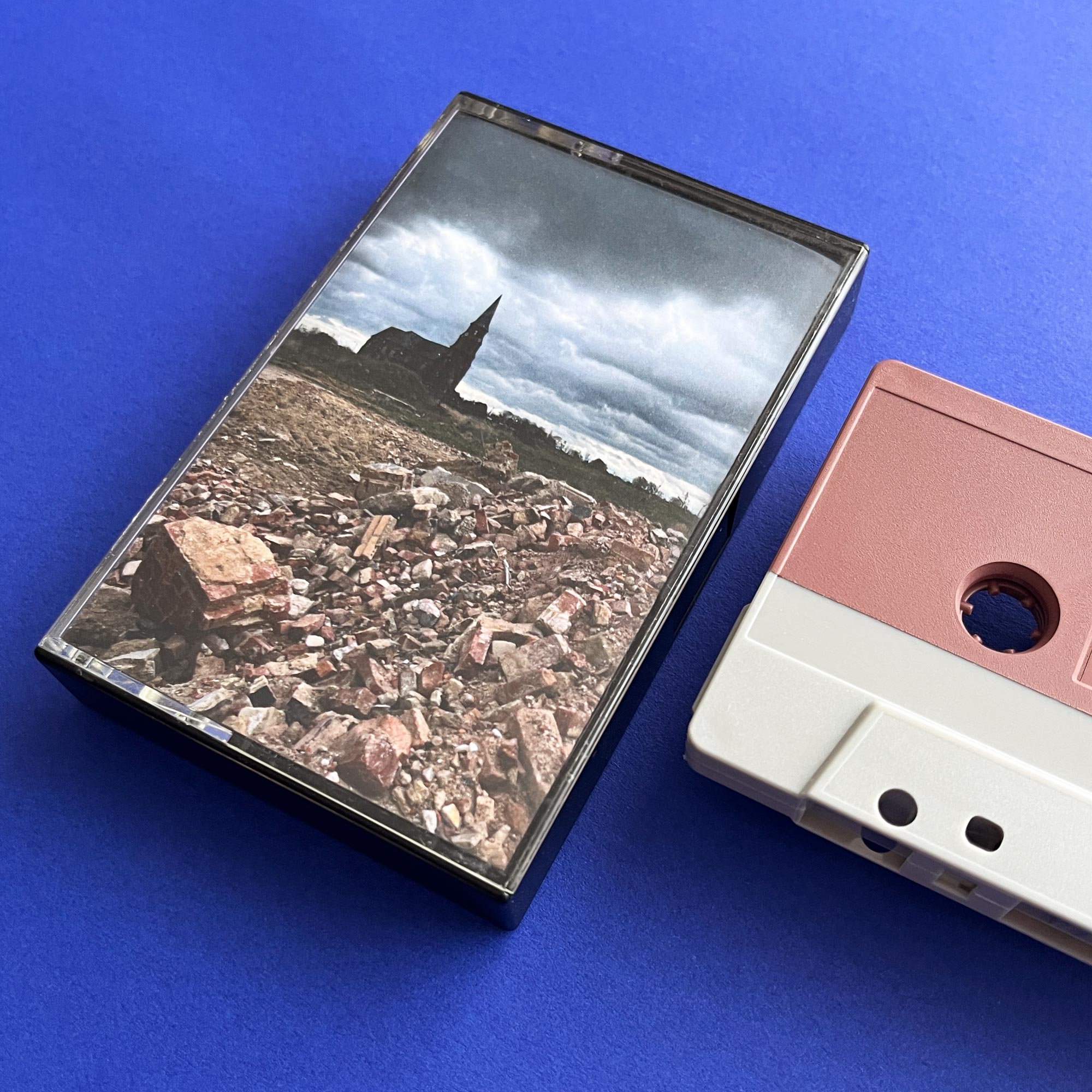
TonDas selected seventeen pieces from this collection of recordings and assembled them into an haunting composition. Griesenbruch24 then transformed these pieces into harsh noise and drone tracks, without altering their original patina.
The tape, released on the Cologne-based label Südturm, will be available at the Temporary Gallery on the evening of the event.
This sonic layer enters into dialogue with the exhibition and the works of Nie Pastille. While TonDas’s recordings make traces of displaced life visible and audible, Nie Pastille pursues a practice of collecting and preserving: branches, fabrics, found objects — seemingly marginal materials become carriers of memory and care. Here, the idea of living matter encounters the concrete remnants of an erased place.
Both the recordings from Manheim and the artistic engagement with alternative forms of living and trailer sites, as explored in the exhibition ins Himmelszelt es leuchtet leuchtend rot, point to processes of displacement within the context of modernity and capitalism. Places are erased because they do not fit into the image of a functional, economised landscape. Ways of living are shifted, outsourced, suppressed. The event brings these layers together into a dense experiential space of sound, material and memory.