RESTROOMS-AS-I-KNOW-THEM
Die Maßnahme
Sat 7 November, 7 p.m.
A performance by the band Die Maßnahme, featuring a concert and a text by Alison Kafer, as part of the exhibition untame flow stay release.
No registration required! The event is free of charge.
Every night, I dream of toilets. Toilets I have to crawl onto or can’t reach; toilets covered in piss and shit; toilets located behind a never-ending series of locked doors, stairwells, and winding passageways. Sometimes I’m alone in the dream, sometimes there are other people, but I always seem to be the only person who cares about the toilets. The dreams don’t feel like nightmares, but that doesn’t make them good dreams, either: they simply are, much like the inaccessible toilets I encounter daily in my waking life.
Alison Kafer
The band Die Maßnahme will perform several of their new experimental pop songs, including a track entitled Sumpf (Swamp), which celebrates the swamp-like nature of our bodies. Die Maßnahme consists of Toni Montgomery and Signe Raunkjaer, who met while studying in the context of the HFBK Hamburg. Their second studio album, WON, will be released in spring 2027 on the Hamburg-based label Misitunes and Abstract Tits DK.
Die Maßnahme will also perform Alison Kafer’s essay Speculative Toilets. Alison Kafer is a US-American scholar whose research focuses on feminist, queer, and disability studies. The auto-theoretical, speculative essay, written by Alison Kafer for the exhibition untame flow stay release, connects personal experiences with questions of accessibility, inclusion, and ecological sustainability. Starting from the everyday experience of inaccessible public toilets, she challenges societal notions of normality and imagines communal spaces that accommodate different bodies and needs while remaining in harmony with their natural surroundings. In doing so, Kafer links the demand for accessibility to questions of the water cycle and the use of natural resources. She critiques the conventional toilet system, which consumes large amounts of drinking water, and asks what alternative infrastructures might look like that are both ecologically sustainable and accessible to different bodies. Water thus becomes a connecting element between bodies, infrastructures, and landscapes. By rethinking the boundaries between human bodies and their environment and relating bodily fluids to the water systems surrounding us, Kafer opens up a speculative space for thought in which fluidity, interdependence, and mutual care are renegotiated. Her text thus connects directly with the exhibition, which takes fluidity and transformation as its starting point for imagining alternative relationships between bodies, water, and the environment, as well as new forms of living together.
Images:
1—Die Maßnahme 2026, Foto: Eva Świątkowski
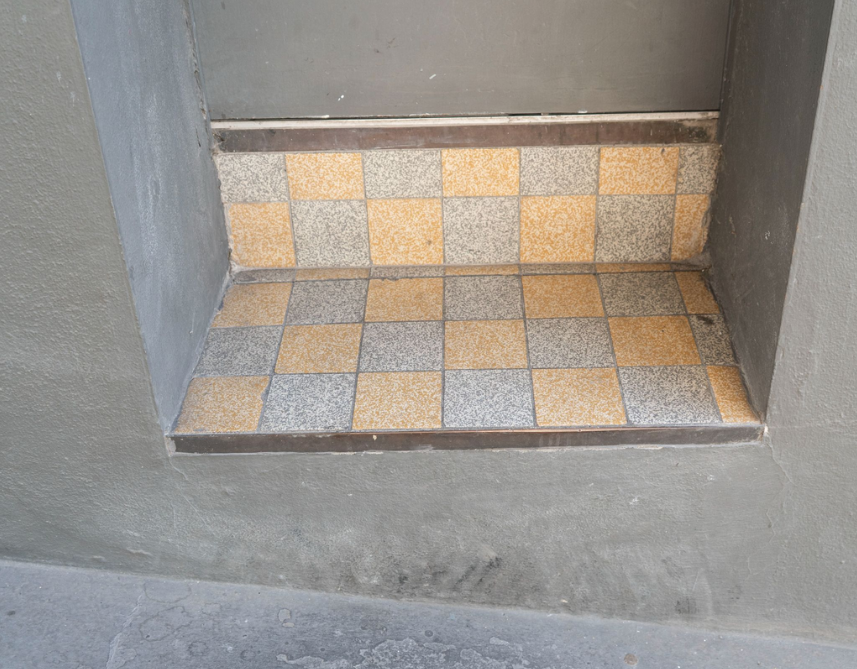
2—Stufen zur Toilette der Temporary Gallery, Foto: Lisa Klosterkötter